
The Government has launched an ambitious initiative to develop Delft Island into Sri Lanka’s first Zero-Emission Eco-Tourism Destination, marking a significant step towards promoting sustainable tourism while preserving one of the country’s most unique natural and cultural landscapes.
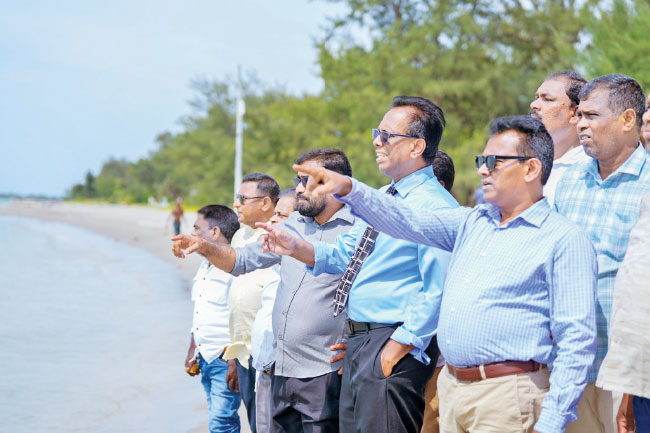
The proposal was discussed during a special site inspection and stakeholder consultation led by Deputy Minister of Tourism Prof. Ruwan Ranasinghe, who said the project reflects the Government’s commitment to balancing tourism growth with environmental conservation and community development.
Located off the Jaffna Peninsula, Delft Island is renowned for its distinctive Dutch-era ruins, archaeological landmarks, coral-stone architecture and iconic wild horses. Despite its exceptional heritage and biodiversity, the island has remained an underutilised tourism asset for decades. The new initiative aims to unlock its full potential by positioning Delft as a world-class sustainable tourism destination without compromising its ecological and cultural identity.
Addressing stakeholders, Prof. Ranasinghe said Delft should become a destination enjoyed not only by international visitors but also by domestic travellers. He stressed that sustainable and environmentally responsible development would be the cornerstone of the project, ensuring that future tourism growth benefits both the environment and the local community.
Discussions centred on identifying priority infrastructure needed to support the transformation. These include improving water supply, upgrading road infrastructure, enhancing transportation and accessibility, and strengthening community participation by equipping local residents with hospitality skills and tourism-related knowledge.
The Government also plans to promote renewable energy and other sustainable solutions to ensure Delft becomes a flagship zero-emission tourism destination. The initiative is expected to serve as a national model for environmentally friendly tourism development, demonstrating how conservation, renewable energy and responsible tourism can coexist.
Beyond its environmental significance, the project is expected to generate new economic opportunities for residents through community-based tourism, small businesses, homestays, handicrafts and other tourism-related enterprises. By encouraging greater local participation, authorities hope the economic benefits of tourism will remain within the island while creating sustainable livelihoods.
The initiative represents an important milestone in Sri Lanka’s broader strategy to develop high-value, low-impact tourism, positioning Delft Island as a flagship destination where environmental conservation, cultural heritage preservation and community empowerment combine to deliver a distinctive visitor experience. (DSA)
Source: Daily News