
As the Computer Society of Sri Lanka marks 50 years of leadership, the 44th National IT Conference (NITC) calls for a new focus on people, digital competency and human-centric adaptation as Sri Lanka moves towards a digitally driven economy and Society 5.0.
Sri Lanka stands at a critical point in its digital journey. Artificial intelligence, automation, cloud computing, data, digital platforms and emerging technologies are rapidly changing the way governments deliver services, businesses operate and people live and work. The pace of this change is unprecedented, creating both significant opportunities and equally significant challenges for the country.
The question before Sri Lanka is no longer whether digital transformation is necessary. It is whether the country can ensure that its people, workforce, businesses and institutions are ready to adapt to that transformation and convert technology into real economic and social value.This is where human-centric digital adaptation becomes critical.
The 44th National IT Conference (NITC) 2026, organised by the Computer Society of Sri Lanka (CSSL), will place this issue at the center of the national conversation. Held from 14 to 16 October 2026 at Shangri-La Colombo under the theme “Human Centric Skills Towards Society 5.0,” NITC 2026 is positioned as more than a technology conference. It is an opportunity to examine how Sri Lanka can build the capabilities, policies and mindset required to move confidently into its next digital chapter.
For CSSL, the conference comes at a particularly significant moment. The organisation is celebrating 50 years of service to Sri Lanka’s computing and technology profession. Five decades represent an important legacy, but they also create a responsibility to look beyond the achievements of the past and help shape the future.
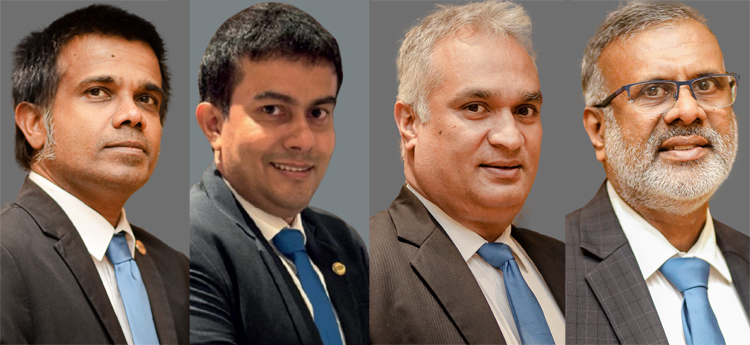
CSSL President Heshan Karunaratne has emphasised the importance of using this milestone not simply to celebrate the organisation’s journey, but to strengthen its contribution to the country in the decades ahead. The next 50 years must be about expanding the role of the professional technology community, developing future-ready talent and ensuring that technology continues to serve people and national development.
That responsibility has never been greater.
Digital transformation is no longer confined to the ICT industry. Every sector of the economy is becoming a digital sector. Government, banking, tourism, logistics, manufacturing, agriculture, education, healthcare and SMEs are increasingly dependent on digital technologies.
As a result, digital competency can no longer be treated as a specialist skill reserved for IT professionals. It must become a core capability across the workforce.
A finance professional needs to understand digital financial systems and data. A tourism professional must be able to work with digital platforms and increasingly technology-driven customers. Government officials need the capability to deliver and manage digital public services. Manufacturers need to understand automation and connected technologies. Entrepreneurs and SMEs need digital tools to improve productivity, reach customers and compete in global markets.
The same transformation is taking place in education and among the wider population.
Sri Lanka therefore needs to build a workforce that is not only digitally skilled today, but capable of continuously adapting as technology evolves. Reskilling and upskilling must become an integral part of the way people learn and work.
This becomes even more important in the context of Sri Lanka’s ambition to build a USD 15 billion digital economy by 2030.
The target cannot be achieved through technology infrastructure, investment and digital platforms alone. It will ultimately depend on the ability of Sri Lankan people and organisations to use those technologies effectively and create economic value from them.
As NITC Conference Chairman Indika De Zoysa puts it, “Sri Lanka’s USD 15 billion digital economy ambition will ultimately depend on the readiness of our people. We cannot build a USD 15 billion digital economy with technology alone. We need a digitally competent workforce that can adopt, apply and create value from technology across every sector of the economy. Workforce readiness is therefore not a supporting element of the digital economy; it is one of its most critical foundations.”
That message goes to the heart of Sri Lanka’s digital challenge. The country’s digital ambition must be matched by an equally ambitious investment in people. Technology can provide the tools, platforms and infrastructure, but it is people who will determine whether those investments translate into productivity, innovation, competitiveness and inclusive growth.
This is particularly important as artificial intelligence begins to reshape almost every industry. AI will not only create new technology-related opportunities; it will fundamentally change the way many existing jobs are performed. The competitive advantage of countries will increasingly depend on how effectively their people can work with AI and other emerging technologies.
Sri Lanka must therefore move from a mindset of simply deploying technology to developing the human capability to use it.
That is the essence of human-centric digital adaptation.
The six tracks of NITC 2026 e-Government; Digital Tourism and Logistics; E-Finance and FinTech; Cybersecurity and Privacy; Digital Sustainability and Digital Public Infrastructure; and Ethical AI and Society 5.0 reflect the breadth of this transformation. They demonstrate that digital development is now closely connected with almost every aspect of economic and social progress.
A successful digital economy must also be an inclusive economy. Digital transformation cannot benefit only those who are already technologically confident. Students, teachers, workers, entrepreneurs, SMEs and citizens across the country must have the opportunity to develop the skills and confidence required to participate.
This is where the concept of Society 5.0 becomes particularly relevant. Technology should not become an end in itself. It must be used to address human challenges, improve quality of life, create new opportunities and build a more inclusive, sustainable and productive society.
Sri Lanka has the opportunity to develop a digital economy that is not simply technology-led, but people-led and enabled by technology.
NITC 2026 will bring together local and international experts, industry leaders, professionals and policymakers to explore these opportunities and challenges. It will also provide a platform for important discussions and announcements that can contribute to shaping the country’s future digital direction.
The CSSL National ICT Awards will further recognise the people behind Sri Lanka’s digital progress from ICT leaders and researchers to educators, students and entrepreneurs. Their achievements demonstrate that technology ultimately creates value through human capability, creativity and leadership.
For CSSL, however, the larger objective goes beyond a three-day conference.
As the professional apex body representing Sri Lanka’s computing and digital technology profession, CSSL has a responsibility to provide leadership at a time when technology is becoming central to the country’s economic future. Its role must extend beyond professional development to strengthening digital skills, promoting professional standards, encouraging responsible technology adoption, supporting innovation and contributing to the national dialogue on digital transformation.
The journey towards a USD 15 billion digital economy by 2030 will require the commitment of government, industry, academia and society. But at its heart will be the readiness of Sri Lanka’s people.
The country cannot afford to have a digital economy moving at one speed while its workforce is prepared for another. Our ambition for the digital economy must therefore be matched by an equally ambitious programme for workforce readiness.
CSSL is ready to take the lead in that journey.
As it marks 50 years, the organisation can look back with pride at the foundations it helped build for Sri Lanka’s computing profession. But the more important opportunity is ahead: to make an even greater contribution to the next 50 years by helping build a digitally competent workforce, strengthening the profession and ensuring that technology remains human-centred.
The first 50 years established CSSL as a trusted professional institution. The next 50 must see it take an even stronger leadership role as Sri Lanka’s professional apex body for the digital industry, helping connect technology, people, skills and national economic ambition.
The 44th NITC is therefore not simply about discussing the technologies that will shape tomorrow.
It is about preparing the people who will shape tomorrow.
Sri Lanka’s digital future will not be determined by technology alone. It will be determined by the ability of its people to adapt, innovate and create value from technology.
That is why putting people at the center of digital transformation is not merely a choice. It is the pathway to a digitally capable workforce, a stronger USD 15 billion digital economy and a more inclusive, competitive and human-centric Society 5.0.
Source: Ada Derana Biz