
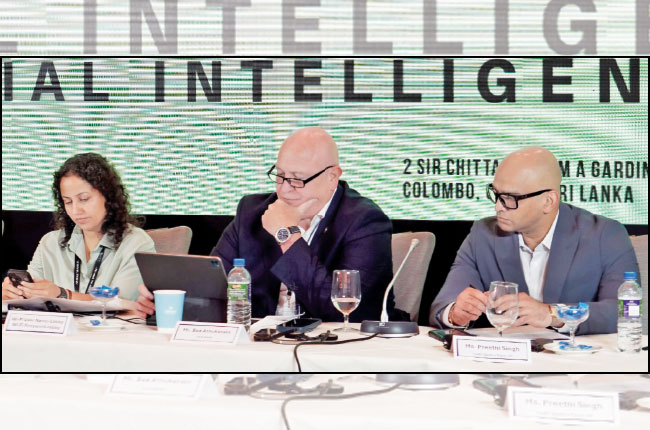
AI should not be a source of fear, but workers must be prepared for its risks and ensure that appropriate safeguards are built into its use, National Union of Seafarers Sri Lanka and Asia Pacific (NUSS) President and CEO Boa Athu said.
Addressing the inaugural AI conference, “Seizing Control,” organised by the ITF Global Union Federation in collaboration with NUSS in Colombo, Athu stressed that artificial intelligence is already reshaping transport and logistics and influencing real jobs and livelihoods.
“AI doesn’t worry or scare me. It shouldn’t scare any of us. Not because risks don’t exist, but because worry and fear is a lack of awareness,” he said.
He noted that AI was no longer merely a technology that predicts outcomes, but one that increasingly makes decisions, schedules, dispatches, measures, nudges and automates activities across the transport sector.
“From seafarers, dock workers, rail crews, bus operators, freight handlers, drivers, controllers, airline crews and pilots, AI is already influencing real work and real livelihoods around the world,” Athu said.
He questioned what would happen to workers and their safety as AI becomes increasingly integrated into transport systems, emphasizing that safety and the interests of workers cannot be treated as an afterthought. He called for “guardrails” to be incorporated into AI systems from the outset, describing them as the brakes, speed limits and emergency exits of AI.
According to Athu, AI systems should protect workers rather than focus solely on productivity, taking into account issues such as fatigue, access to food, training differences, language barriers and shift patterns. He also called for genuine accountability when AI-related decisions cause harm, warning that responsibility should not be concealed behind claims that a decision was made by “data” or an algorithm. He stressed the need for meaningful human oversight, transparency, the right of workers to challenge decisions, and strong protection of privacy and dignity. Athu further warned against excessive workplace surveillance, including biometric monitoring, becoming a form of “Big Brother” in the workplace. He also highlighted the growing environmental demands of AI, particularly the huge quantities of electricity and water required by hyperscale data centres.
“AI can, and if we’re not careful, will become its own species, competing against us humans,” he cautioned, calling for greater consultation with workers and society before such developments accelerate further. He said the ITF had an important role to play in ensuring that workers remain at the centre of discussions on AI and its impact on transport and logistics.
“Workers should be at the heart of shaping AI before AI rules shape workers. AI is, of course, excellent in spotting patterns, but let us be the force and the pattern which shapes how AI is administered in the world of transport workers,” Athu said.
He noted that Colombo was an appropriate location for the discussion as Sri Lanka and the wider region are positioned at the crossroads of global trade, movement and transportation. He urged participants to use the conference not merely to discuss the potential of AI, but to establish responsible limits on its use.
“Let’s build an AI future that is efficient, yes, but also safe, fair and accountable,” he said.
Source: Daily News