
Central banks must adopt artificial intelligence with strict governance and human oversight to prevent emerging technologies from eroding public trust in financial systems, International Monetary Fund (IMF) Chief Information Officer Shirin Hamid said.
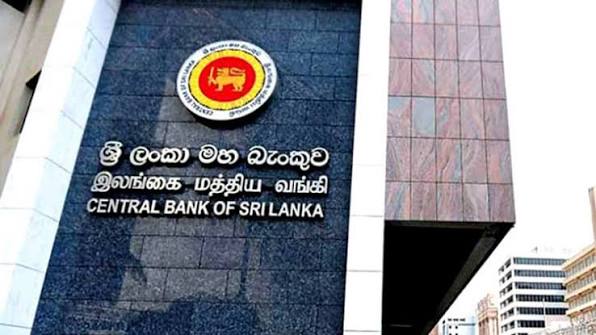
Delivering the 76th Anniversary Oration of the Central Bank of Sri Lanka (CBSL) in Colombo on Friday, Hamid warned that rapid AI adoption brings serious vulnerabilities, including voice cloning, deepfake fraud, and autonomous machine-speed cyberattacks.
“The intelligent central bank is not the bank with the most AI, It is the bank whose AI can be trusted, and can ensure that any AI that touches the financial system is explainable, governed, secure, ethical, and human-supervised,” Hamid said.
Hamid highlighted three major AI threats confronting financial institutions worldwide: impersonated humans using cloned audio and video, autonomous AI swarms executing attacks at machine speed, and indirect breaches that manipulate internal AI assistants already inside bank firewalls.
She noted that as little as three seconds of recorded voice is now enough for AI to produce an indistinguishable clone.
She also warned of data risks, revealing that when the IMF tested commercial generative AI on economic figures, tools like ChatGPT returned inaccurate GDP figures up to two-thirds of the time.
Because plausibly wrong numbers threaten institutional credibility, the IMF developed its own system, StatGPT, to run queries directly against verified data rather than letting models guess.
Hamid urged monetary authorities to ground their technological transitions in four pillars: dependable data, trustworthy systems, operational resilience, and adaptive governance.
Hamid emphasized that institutions must never treat AI simply as an IT department project, pointing out that human judgment remains the scarcest and most vital resource.
“For every AI-influenced decision, we need a named human who is answerable,” Hamid said. “We should aim to augment judgment first, and grant autonomy only where it has been earned,” Hamid said.
Hamid concluded that while financial tools will continue to evolve, the primary mission of an intelligent central bank remains unchanged: safeguarding public confidence from the vault to the algorithm.
Source: Economy Next